
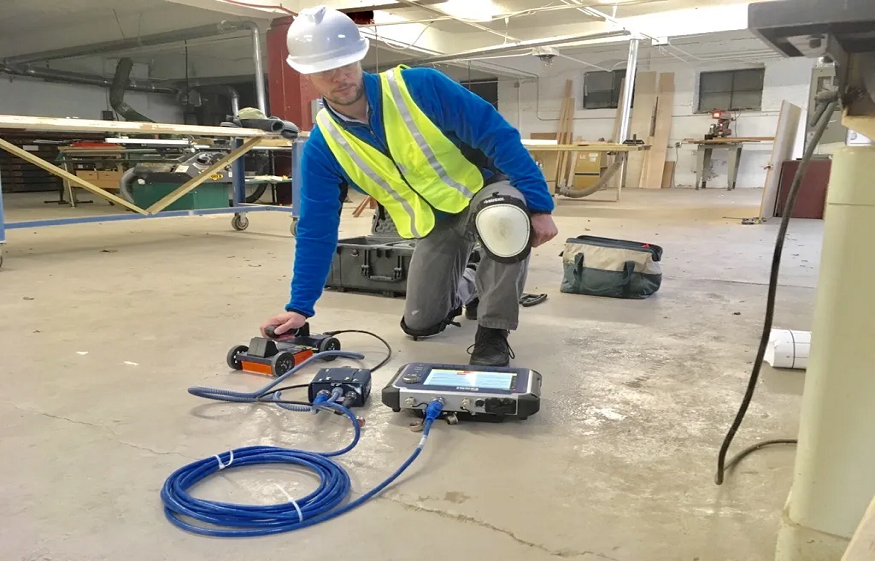
From Utilities to Voids: Innovative Ways GPR is Changing Construction Safety
In modern construction, safety is always a top priority. One of the challenges contractors face is the hidden infrastructure beneath the surface — everything from pipes and electrical conduits to voids or unstable ground. Accidentally hitting these elements can lead to costly delays, equipment damage, or serious injuries. This is where Ground Penetrating Radar (GPR) is revolutionising the industry, giving construction teams a safer, smarter way to understand what lies beneath before they dig.
What Is Ground Penetrating Radar (GPR)?
GPR Scanning is a non-destructive scanning technology that uses radar pulses to create a detailed map of the subsurface. It can detect a variety of materials, including:
- Metal pipes and conduits
- Reinforced concrete
- Voids or air pockets
- Utility lines and cables
By sending radar waves into the ground and measuring the signals that bounce back, GPR provides real-time imaging of hidden objects and structures. Unlike traditional methods that rely on maps or manual detection, GPR reduces guesswork, enhances accuracy, and dramatically improves safety on construction sites.
Read More: SHEINER CONSTRUCTION GIVES SOME ADVICE FOR ADU CONSTRUCTION IN SAN DIEGO
Why GPR Matters for Construction Safety
Construction sites are inherently risky, and unknown underground hazards add another layer of danger. Hitting a water pipe, gas line, or electrical cable can have serious consequences. GPR mitigates these risks by:
- Identifying potential hazards before excavation
- Reducing the likelihood of accidental damage
- Protecting workers and reducing liability
- Supporting compliance with safety regulations
For builders, engineers, and surveyors, GPR is no longer a luxury — it’s becoming an essential tool in modern risk management.
Practical Applications of GPR
GPR technology can be applied across a range of construction scenarios:
- Utility Mapping: Scan the ground to locate buried cables, pipes, or ducts.
- Void Detection: Identify cavities or unstable soil before digging.
- Concrete Inspection: Check for embedded reinforcement, rebar, or post-tension cables.
- Quality Control: Assess material integrity and detect potential weak spots.
These applications help prevent costly errors, reduce project delays, and enhance overall site efficiency.
Advantages Over Traditional Methods
Before GPR, many construction teams relied on blueprints, manual probing, or excavation to locate underground utilities. These methods are often:
- Time-consuming
- Inaccurate
- Risk-prone
GPR provides a fast, non-invasive alternative. With high-resolution imaging, teams can plan excavation, construction, or maintenance with confidence, significantly reducing both risk and cost.
The Future of Construction Safety
As GPR technology advances, its applications continue to expand. New developments include:
- 3D subsurface imaging for more detailed site analysis
- Integration with GPS and mapping software for precise location data
- Portable and drone-mounted units for hard-to-reach or large-scale sites
These innovations are transforming construction, allowing teams to work smarter, safer, and more efficiently.
Maximising GPR on Your Site
To get the most from GPR, consider these best practices:
- Use trained operators: Skilled technicians interpret radar data accurately.
- Combine with other surveys: Integrate GPR with GIS mapping, utility records, or drone surveys.
- Plan in advance: Identify high-risk zones and schedule scans before excavation.
- Regular updates: Continually scan sites that change due to ongoing construction.
By implementing GPR strategically, construction teams can protect both workers and infrastructure, ensuring projects remain on time and on budget.
Real-World Case Studies: GPR in Action
GPR has already transformed safety and efficiency on countless construction projects worldwide. For example, a large urban infrastructure project in Sydney required extensive excavation for new underground utilities. By using GPR, engineers were able to accurately map existing pipelines and electrical conduits, avoiding costly accidental strikes. Traditional methods would have required multiple exploratory digs, adding weeks to the project timeline and increasing safety risks for workers.
Similarly, in Melbourne, a construction team used GPR to detect voids beneath a concrete slab scheduled for demolition. The scan revealed hidden cavities that could have caused slab collapse during removal. By knowing exactly where the voids were, the team was able to reinforce the area and plan a safe demolition strategy, preventing potential injury and expensive structural damage. These examples illustrate how GPR doesn’t just improve safety — it protects budgets, timelines, and reputations.
Emerging Innovations in GPR Technology
The capabilities of GPR continue to expand with technological innovation. Modern systems now offer high-resolution 3D imaging, allowing operators to view underground structures in three dimensions rather than relying on flat scans. This makes it easier to differentiate between materials, detect anomalies, and plan excavations with surgical precision.
Integration with GPS and mapping software is another game-changer. Construction managers can overlay GPR data onto site maps, enabling teams to pinpoint hazards with centimetre accuracy. Drone-mounted GPR units are also emerging, allowing large or difficult-to-access sites to be scanned quickly and safely.
Artificial intelligence (AI) is now being applied to GPR data analysis, improving detection accuracy and automatically flagging potential hazards. This reduces the reliance on human interpretation alone, minimising the risk of oversight and accelerating decision-making.
Economic Benefits of GPR
While the upfront cost of GPR technology may seem significant, the long-term economic benefits are substantial. Avoiding utility strikes, structural damage, and project delays can save tens of thousands of dollars on medium to large-scale projects. Insurance premiums may also be reduced when GPR is integrated into standard safety protocols, as the technology demonstrably mitigates risk.
Moreover, GPR allows projects to run more efficiently, reducing downtime and enabling better resource allocation. Contractors can schedule work with confidence, knowing that the subsurface has been accurately mapped, which also improves client trust and project reputation.
Best Practices for Implementation
To maximise the return on investment, construction teams should:
- Conduct pre-construction scans to map all utilities and voids.
- Use GPR data in combination with historical plans for accuracy.
- Maintain a record of scans for future reference and compliance purposes.
- Train staff regularly on new GPR technologies to ensure accurate interpretation.
Read More: PVCO PIPE BENEFITS, APPLICATIONS AND INSTALLATION TIPS
By embedding GPR into the planning, excavation, and monitoring phases, construction companies can dramatically improve safety, efficiency, and profitability.
Conclusion
Ground Penetrating Radar is more than just a tool — it’s a strategic asset that transforms construction safety and efficiency. From detecting hidden utilities and voids to enabling advanced project planning, GPR equips teams with the knowledge they need to work smarter and safer. As technology advances, the benefits will only grow, making GPR an essential part of modern construction practice.