
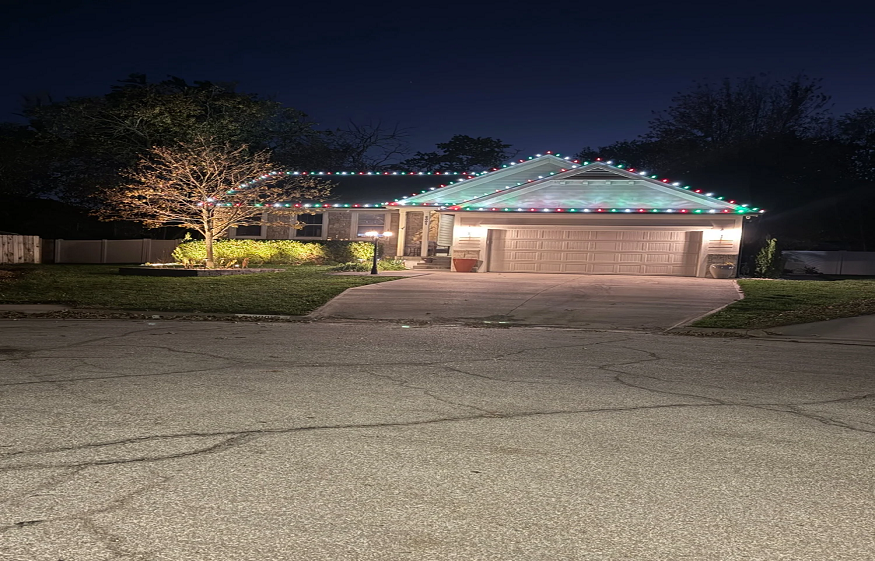
Permanent Outdoor Lighting: The Architectural Accent That’s Replacing the Porch Lamp
For most of the last century, exterior home lighting meant one thing: a porch light by the front door, maybe a pair of coach lamps flanking the garage, and if the homeowner was feeling ambitious, a couple of stake lights along the walkway. The look was functional but flat. After dark, even the most beautifully designed home faded into a silhouette — the architecture you paid a premium for essentially disappeared every night at sunset.
That’s starting to change in a real way. Designers and homeowners are increasingly treating the exterior of the house the way they treat the interior: as a canvas that deserves intentional, layered lighting. The fastest-growing piece of that shift is permanent outdoor lighting — slim LED tracks installed once under the eaves and soffits, then controlled from an app for the rest of the home’s life. Companies like First Response Lights install systems that essentially vanish into the trim during daylight and turn the home’s rooflines into a soft, defined glow at night. It’s a design move first and a holiday feature second, and that reframing is what’s pulling it into the mainstream.
If you’ve only ever thought of permanent lighting as a Christmas-light replacement, here’s the design case for it.
Lighting as architecture, not decoration
Walk through any high-end neighborhood after dark and you’ll notice something. The homes that look the most expensive aren’t the ones with the brightest floodlights — they’re the ones where the lighting feels intentional. A wash of warm light across a stone facade. The roofline gently traced. A subtle uplight on a single tree. None of it screams. All of it elevates.
That look used to require a custom landscape lighting designer, several thousand dollars in fixtures, and a transformer buried in a flowerbed somewhere. Permanent eave lighting accomplishes something close to it for a fraction of the design fee, because the system is already running along the most architecturally important line of the house: the roofline. Switch the system into warm white at sunset and the entire silhouette of the home reads as deliberate. The eye follows the gables, the dormers, the porch rooflines — details that were invisible the night before.
Read More: WATER PURIFIER PRICE EXPLAINED: WHAT YOU’RE REALLY PAYING FOR
Color as a seasonal design tool
This is where permanent lighting starts to feel less like a fixture and more like a decor element you can change with the calendar.
Traditional exterior lighting is static. You install it, you turn it on, that’s it. A permanent system is the opposite — you can shift the entire mood of the home’s exterior the same way you might swap out throw pillows or change a wreath on the front door. Soft amber in autumn. Cool white in winter. Warm peach in summer evenings when you’re entertaining on the patio. Deep red and forest green for the two weeks around Christmas, then back to a clean white for January. Pastels for a spring brunch. It’s a design lever that didn’t exist before.
The homeowners who get the most out of their systems usually aren’t the ones running rainbow chases every night. They’re the ones who treat color the way an interior designer treats accent walls — sparingly, intentionally, and tied to a specific moment.
The details that separate a design install from a hack job
If you’re going to invest in permanent lighting as a design feature, the install matters more than the system itself. A few things to watch for:
The track has to disappear in daylight. This is the single biggest tell of a quality install. Good installers tuck the aluminum channel up underneath the drip edge so it’s invisible from the street. Sloppy installers surface-mount it on the fascia, where it reads as a strip of hardware no matter how nicely it’s painted. Always ask for daylight photos of finished work — not just glamour shots at night.
The brand affects the look. The market has settled around a handful of well-known systems — Jellyfish Lighting, Trimlight, and Govee being the most common ones homeowners encounter while researching. They differ in LED spacing, color rendering, channel profile, and how the diffusion looks up close. The differences are real and worth seeing in person before signing a contract.
LED density matters for the warm-white mode. Cheaper systems space their LEDs further apart, which produces a slightly dotted look when running solid colors instead of a smooth wash. If the everyday warm-white architectural mode is what you care about most (and for most design-focused homeowners, it should be), ask about node spacing during the quote.
Coordinate with your existing exterior fixtures. Permanent lighting works best when it complements your coach lamps, sconces, and landscape lighting rather than competing with them. A good installer will ask about your existing fixtures and recommend a warm-white temperature that matches them, so the whole exterior reads as one coherent lighting scheme instead of two systems fighting each other.
Read More: INSTANT GEYSER MAINTENANCE TIPS THAT EVERYONE SHOULD KNOW
A few practical considerations
Permanent lighting isn’t the right move for every home. If you’re planning to repaint the fascia or replace the gutters within the next year or two, wait — you don’t want to install a track and then have to work around it during another project. If your HOA has restrictions on exterior lighting, read them carefully before committing; most allow these systems because they’re invisible during the day, but a few have written rules about color use that are worth knowing in advance.
It’s also worth being honest with yourself about how you’ll actually use the system. The novelty of changing colors every night wears off faster than you’d expect. The thing that doesn’t wear off is the warm-white architectural mode, which is what most homeowners end up running 340 nights a year.
The bottom line
The exterior of your home is one of the largest design surfaces you own, and for most of history it’s gone dark at sunset. Permanent outdoor lighting is the first practical way to extend the design of the home into the evening hours without hiring a landscape lighting designer or installing a dozen separate fixtures. Treated as a design element rather than a holiday gimmick, it’s one of the highest-impact exterior upgrades on the market right now — and unlike a fresh coat of paint or new landscaping, it shows up the moment the sun goes down.