
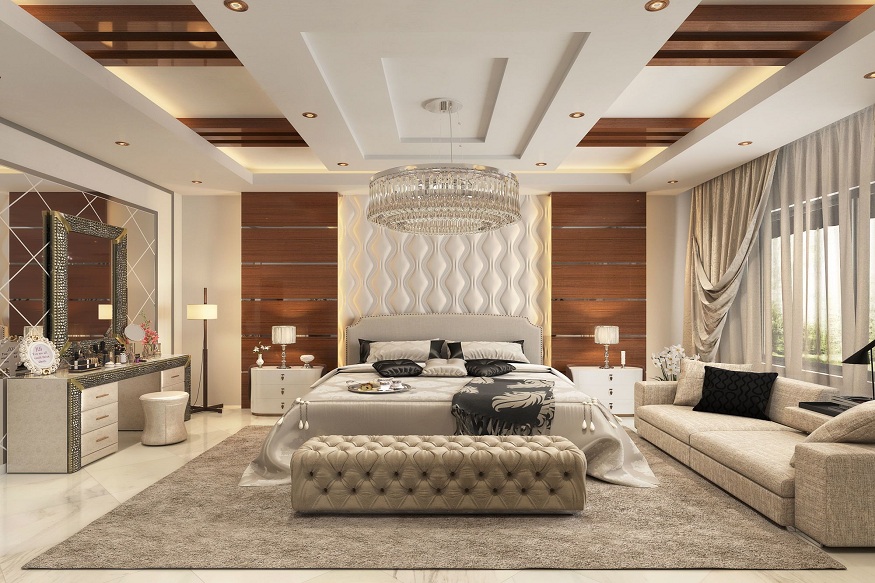
Bedroom Design Shaped by Time, Place, and Culture: When Design Finally Starts Listening to the Home in the Francisco Bay San Area
Most bedroom designs while well intended, they start in the wrong place. People treat it like a checklist, pick a style, buy matching furniture, choose colors that “go together,” and assume the job is done. It looks clean in the beginning. Even impressive. That creates a space designed for the eyes, but not for the human body.But the moment you actually live in it, reality shows up; a functionally broken space.
Expert designers understand that a bedroom was never just about what you place inside it.It was always about what the building already is, and whether you chose to listen to that or fight it.
Every home has its own pressure points. Its structure, its age, its proportions, the way light enters and disappears during the day. Ignore that, and the room feels slightly off no matter how expensive it looks. Work with it, and something changes immediately—the space stops feeling “designed” and starts feeling inevitable.
That’s the real shift: not decoration, but alignment with reality.
1. Edwardian and Victorian Bedrooms: Stop Fighting the Building
Older homes don’t behave like modern ones.A bedroom in a Victorian or Edwardian property isn’t a blank canvas, it already has opinions. The proportions are specific. The detailing carries history. The structure doesn’t flex to trends.
And that’s where most renovations go wrong. They try to erase what’s already there. However, respecting a historic bedroom doesn’t mean turning it into a museum or forcing a modern template onto it. Experts in Bedroom Styling Services come handy in overcoming these complexes by layering modern luxury, quiet acoustics, and seamless storage into the existing historic framework. That turns the home’s rigid constraints into its greatest design advantages.
Good design works with the grain of the building, not against it.
That usually means:
- Letting the architecture guide where things go, instead of forcing symmetry
- Working around built-in features instead of covering or flattening them
- Treating the room as something already complete, not something to “reset”
Of course, these spaces come with real challenges. They can feel heavy, dim, or acoustically exposed. So improvements in terms of better insulation hidden behind finishes, lighting that adapts through the day, and materials that bring warmth back without changing the character, help create a space that feels completely inevitable, authentic, and naturally balanced.
Read More: HOW SUCCESSFUL RESTAURANTS USE DESIGN TO SUPPORT THEIR BRAND
2. Mid-Century Bedroom Layouts: Letting the Room Breathe
Mid-century homes don’t want to be over-controlled. They were built around openness; light, view, air, and a sense of connection to what’s outside. In these bedrooms, the mistake is overfilling the space and breaking what already works naturally.
So design becomes more about restraint than addition.
That usually looks like:
- Keeping sightlines open instead of blocking them with bulk
- Using lower, quieter forms that don’t dominate the room
- Choosing materials that feel like they belong to the landscape, not against it
There’s a kind of honesty in these spaces. If you push too hard, they lose their clarity. But when you step back and let them breathe, everything clicks into place. The room stops performing and starts feeling settled, like it never needed help in the first place.
3. High-Rise Bedroom Planning: Surviving Without Mental Noise
City living changes the rules completely; space is limited, structure is fixed, and nothing is flexible just because you want it to be. So the bedroom has to work harder, not visually, but psychologically. The real problem isn’t space, it’s mental clutter.
When everything happens in one tight environment, your mind never fully switches off. Work bleeds into rest. Rest bleeds into everything else. The room starts holding too much identity at once.Good design fixes that by reducing friction, not adding features.
- Spaces are divided without feeling closed off
- Storage disappears instead of competing for attention
- Utility is integrated so nothing visually overwhelms the room
The goal is simple: help the brain understand when to slow down.Not by changing the size of the room, but by changing how it feels to exist inside it.
4. The Real Rule: The Room Doesn’t Obey the Designer
No matter the style, one truth stays consistent. A bedroom is not independent from its structure. It never was.It is shaped first by the building, then by the environment, and only after that by design decisions. When people ignore that order, the room always feels slightly wrong—no matter how polished it looks.
The best designers don’t force outcomes, they read the space, respond to it, and adapt instead of overpowering. That means experienced designers will not force a trend onto a room, but they will adopt a design approach that let’sthe room’s inherent physical traits dictate the solution.
Read More: BEYOND THE MAN CAVE: MODERN POOL TABLE DESIGNS THAT ELEVATE YOUR HOME INTERIOR
That way, the room’s native characteristics becomes the layout rules rather than obstacles. And if there are limitations, they treat them as the blueprint for custom innovation rather than compromises. And when that happens, something subtle but powerful shows up. The room stops feeling “placed,” it starts feeling like it belongs.
In essence, a bedroom doesn’t become successful because it follows a style. It becomes practically fulfilling its design aligns with structure, behavior, and environment. The result isn’t just a better-looking space, it’s a quieter way of living inside it. An expert bedroom designer prevents this by analyzing your space through an integrated design framework that helps achieve structural precision and align space with human routines and environmental requirements.